Modelling the DN&SR
by Mikkel Kjartan
(pictures from the collections of the author or the webmaster)
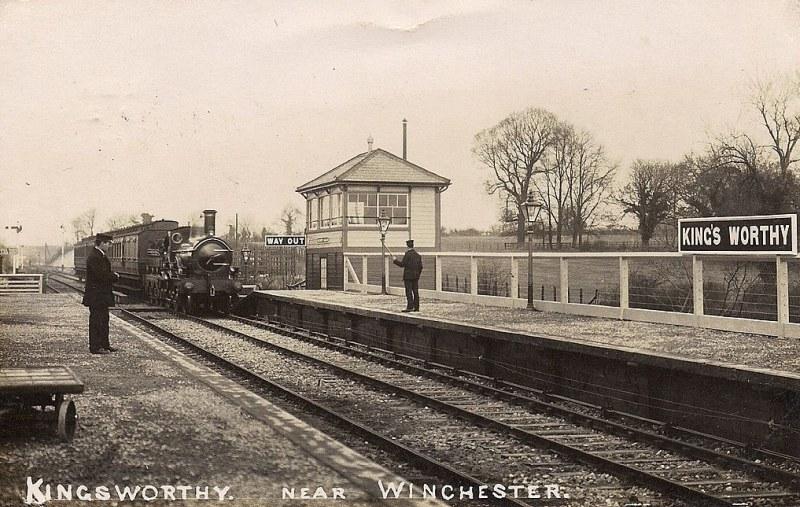
King's Worthy station, September 1909, from the author's collection of postcards
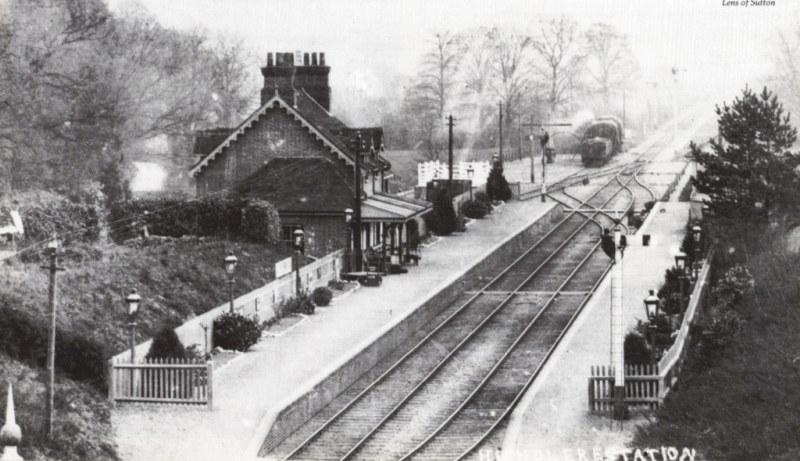
Highclere station, pre-WWI
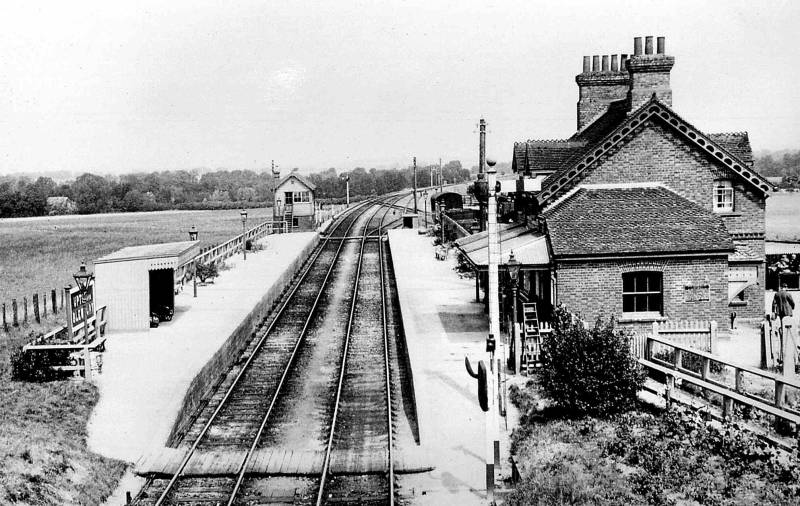
Upton and Blewbury station, 1919
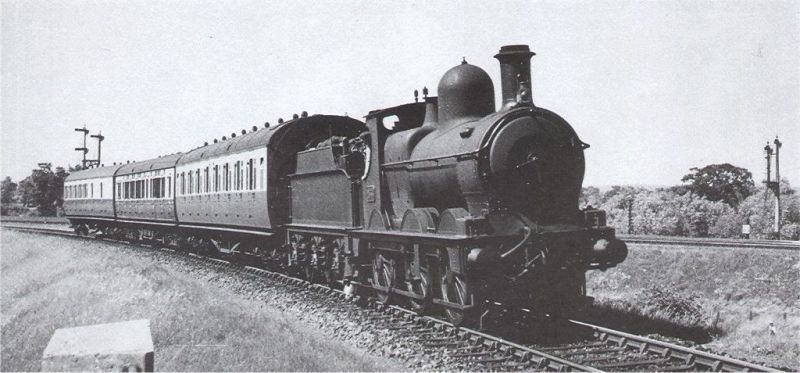
With a typical DN&S 3-coach train, Dean Goods 2566 begins the climb to Upton after leaving Didcot East Junction, 10 June 1939
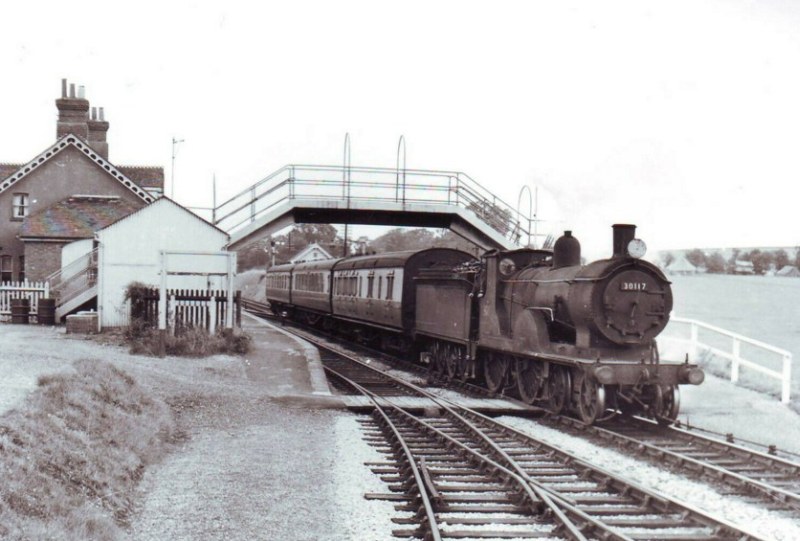
T9 at Compton, c 1950
Introduction
The story of the Didcot, Newbury and Southampton Railway is a fascinating study in ambition, manipulation and failure. The full story is too complex to recount here, but essentially, a small company's dream to build a line that connected the North with Southampton drowned in a much larger railway game between the GWR and the LSWR.
After much back and forth, the GWR ended up operating the line from Didcot to Winchester, with trains being forwarded from there to Southampton by the LSWR (and later the SR). The GWR part of the line was divided into two sections, the Northern section stretching from Didcot to Newbury, and the Southern section from Newbury to Winchester. |
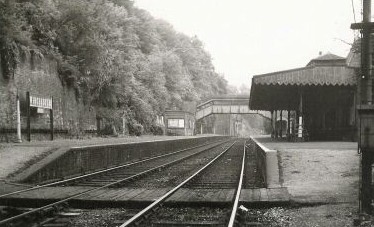
Winchester Chesil, looking south towards Bar End yard (from the authors's collection of postcards) |
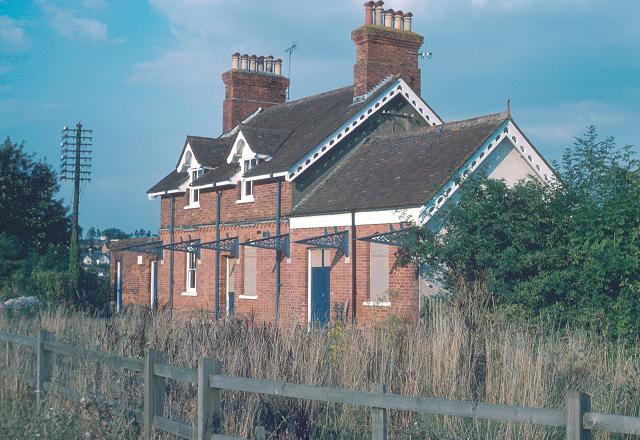
Whitchurch Station after closure, with the canopy removed
Photo courtesy David Wainwright |
 |
| Some great footage taken along the line on 18 August 1962 |
|
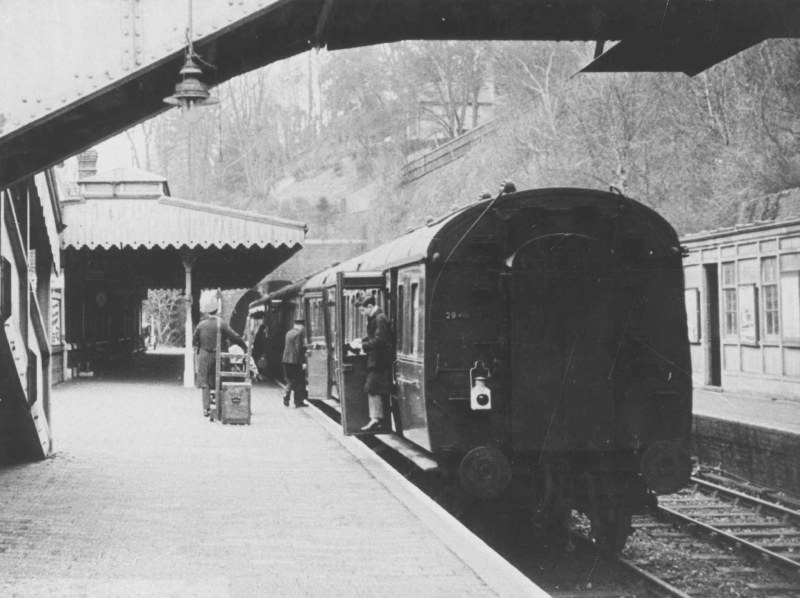
Passengers at Winchester Chesil, in BR days
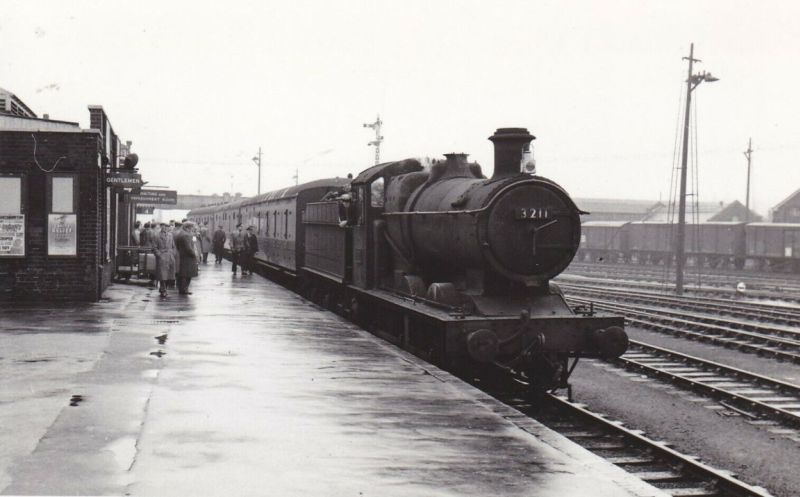
Collett Goods 3211 in the loop platform at Eastleigh, with a Didcot to Southampton train, on a cold and wet 2 January 1960.
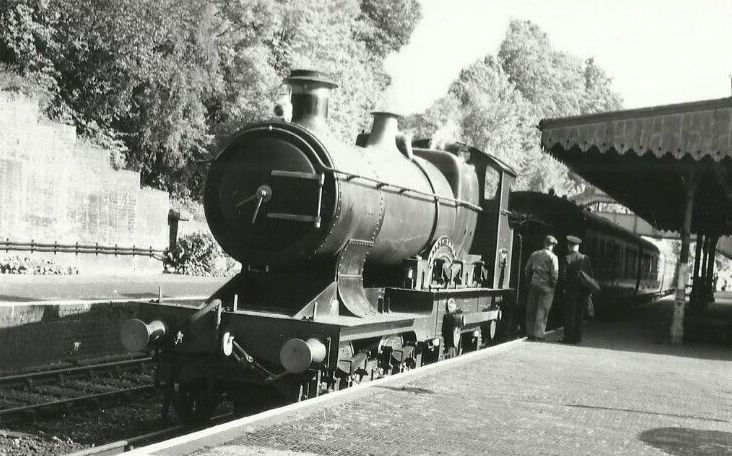
City of Truro waits at Winchester Chesil with a northbound train
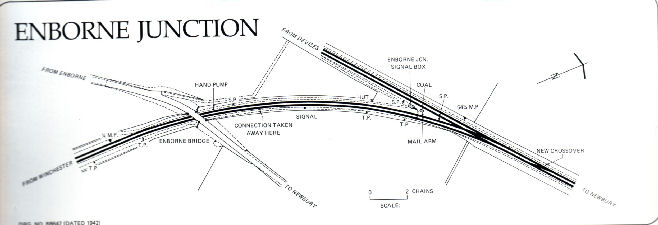
Track plan of Enborne Junction
Design and layout potential
Compared to its neighbours, the M&SWJR and the S&D, the DN&SR has received rather little attention from modellers, and very few layouts seem to depict this line. Yet is has some considerable scope for modelling.
The railway had a very distinctive style of is own: the two-storey stations were quite unlike anything else you'll find on most GWR lines, and can help make a layout that is a little different from all the rest, yet easily identifiable. Many still survive as abandoned or residential houses, and so can be visited and photographed if you're into that level of detail. An example can be seen in David Wainwright's photo of Whitchurch station building.
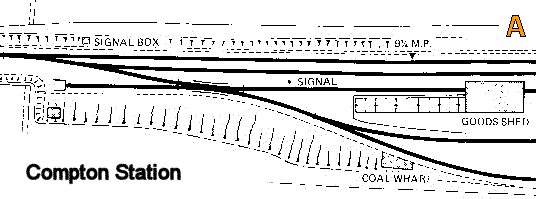
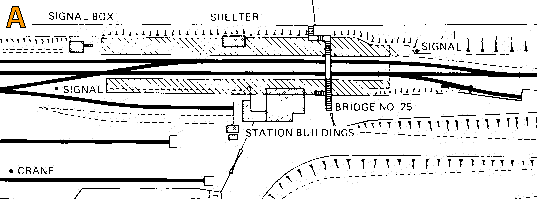
The line also had some interesting trackplans. In particular, there was a recurring pattern of trackplan (see example below) on many of the through stations that offers some quite interesting scope for layout operation. Moreover, the use of bay platforms at both Didcot and Newbury may be compelling to those who have very litle space but would like to model a cross-country line.
The history of the line also offers several 'might-have-been' scenarios if you don't want to model an exact prototype (see map of the line below). For the branchline modeller, there's a nice little line to East Ilsley which never materialized, as well as several proposed branches to link up with the surrounding GWR and LSWR lines. Apart from that, there's the actual independent line from Winchester to Southampon, which was commenced but never completed, as well as the more fanciful proposals for extensions towards Portsmouth and Bournemouth.
Moreover, there is scope for GWR/SR joint operations here. The two companies exchanged stock at Winchester, but a fictious joint station elsewhere on the line would also be quite plausible.
|
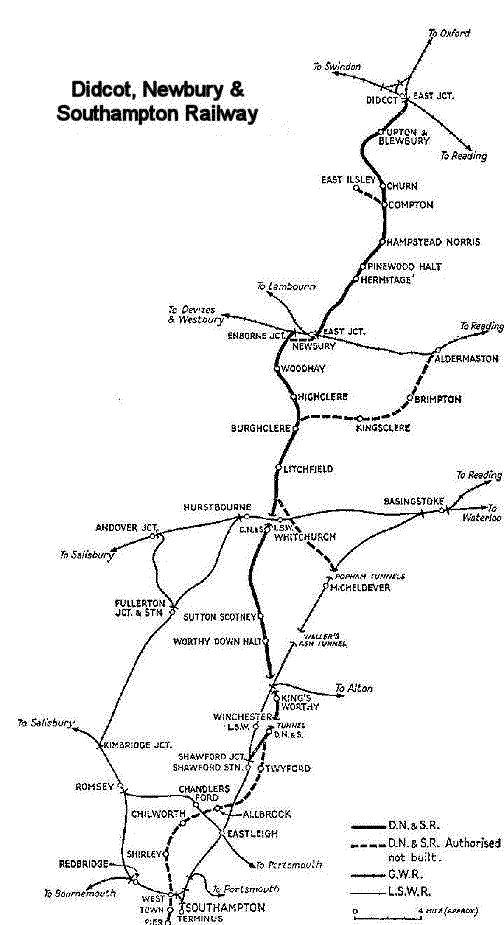
Map of the DN&SR |
| Compton Station plan (A joins A) |
 |
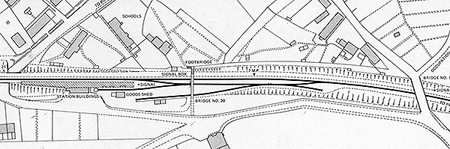
| Plan of Hampstead Norris, before the northern section of the line was doubled in WWII |
 |
Operation and stock
In terms of operation, a great advantage for the modeller is that the line was mostly served by very short trains. The typical arrangement of a tender loco and 2 to 3 bogie coaches on each service means that you can model a cross-country line in a relatively limited space.
The line saw the use of some rather quaint locomotives over the years. Before the grouping in 1923, this was a GWR 'operated' line, meaning that it was operated by the GWR, but owned by the independent DN&S company. As a result, the GWR tended to allocate rather ageing locos to the line, which were redundant elsewhere.
This trend continued after the GWR take-over at the grouping, and was supplemented by larger more modern locos during the war-years, when the line became temporarily important. The table below gives an overview of the various locos used on the line through the years.
Rolling stock was perhaps less varied, and yet not without interest: Non-gangwayed clerestory coaches were used until the early 1940s, after which Collett steel stock took over. The short rakes were supplemented with occasional through coaches from Paddington, and – in the pregrouping period – also with stock from the Great Central and other Northern companies. Note also that the extensive horse traffic on the line provides a welcome excuse for the use of horseboxes of both GWR and 'foreign' origin.
|
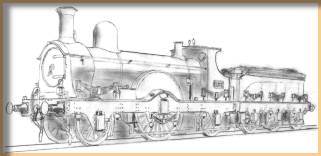
GWR 2-2-2 'Queen' Class: when retired from mainline services, the Queens were devolved to secondary working – including the DN&S line in the early 1900s.
Drawing courtesy of Scorpio Models, who have a 7mm kit available for the class.
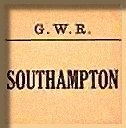
Luggage label |
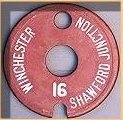
Signalling tablet |
|
Indicative list of GWR locos on the DN&S
| Class |
Type |
Period |
Notes |
4mm model |
7mm model |
| Ex-P&T |
2-4-0 |
Pre-1900 |
Ex Pembroke & Tenby Railway |
|
|
| 157 |
2-4-0 |
Early 1900s |
|
|
|
| Queen |
2-2-2 |
Early 1900s |
|
|
Scorpio
|
| River |
2-4-0 |
Early 1900s |
|
Peter K |
|
| 1661 Class |
0-6-0ST |
1900s |
|
|
|
| Sir Daniel |
0-6-0 |
Late 1900s |
|
|
|
| Armstrong Goods |
0-6-0 |
1900 -early 1910s |
|
Nu-Cast
|
Scorpio |
| 2361 |
0-6-0 |
1900 to early 1910s |
|
|
|
| Dean Goods |
0-6-0 |
1900s–1910s |
|
Blacksmith, Finney |
Javelin, Finney, ABS |
| 1076 |
0-6-0ST |
1900s-1910s |
Mainly Didcot-Newbury section |
Gibson |
Scorpio |
| 517 |
0-4-2T |
1900s – early 1910s |
Mainly Didcot-Newbury section |
Gibson |
Mitchell, ABS |
| 806 |
2-4-0 |
1900s-early 1920s |
|
|
|
| 3226 |
2-4-0 |
1900s & early 1920s |
|
|
|
| 2201 |
2-4-0 |
1910s |
|
|
|
| 481 |
2-4-0 |
1910s |
|
|
|
| Stella |
2-4-0 |
1910 -early 1920s |
|
Finney |
Finney |
| 3232 |
2-4-0 |
1910 -early 1920s |
|
Finney |
Finney |
| Barnum |
2-4-0 |
1910s–early 1920s |
|
Blacksmith |
|
| 3521 |
4-4-0 |
1920s |
|
Falcon |
|
| Duke |
4-4-0 |
1920s–late 1930s |
|
Nu-Cast, Falcon, Blacksmith |
Javelin |
| Ex-M&SWJR |
2-4-0 |
Mid-1920s–1930s |
Combined with Lambourn branch workings |
Nu-Cast |
|
| Metro |
2-4-0T |
1930s–1940s? |
Mainly Didcot-Newbury section |
Roxey, Finecast, Falcon |
Acorn, Roxey |
| Bulldog |
4-4-0 |
Late 1930s–1940s |
|
Finney, Falcon |
Finney |
| Collett Goods |
0-6-0 |
Late 1930s–1940s |
|
Bachmann, Finney, Finecast |
Wagon & Carriage, Springside |
| 28xx |
2-8-0 |
1940s |
Especially war years |
Hornby, Westward, Finney, Falcon |
Slaters, Wagon & Carriage Works |
| Hall |
4-6-0 |
1940s |
Once only – it scraped the platforms! |
Hornby, Bachmann, DJH, Finney |
Springside, Finney |
| Railcar |
n/a |
1940s? |
Didcot-Newbury section only |
Lima |
RJH |
| 43xx |
2-6-0 |
Late 1940s |
Espec. Post-Nationalization |
Bachmann, Mitchell |
Mitchell, Springside |
| 93xx |
2-6-0 |
Late 1940s |
Especially post-Nationalization |
Bachmann |
|
| City |
4-4-0 |
Post-1940s |
Restored by BR and used frequently on the DN&S |
Dapol, Nu-Cast, Finney |
Javelin, Finney |
Post-nationalisation operation on the DN&SR
Apart from the pre-nationalisation focus of the list above, Xpress Publishing have kindly provided a few additional notes on the post-nationalisation scene:
- Hall and Grange 4-6-0s were permitted to run up to 40 mph between Didcot and Newbury and in an emergency at 20 mph from Newbury to Winchester
- 93xx engines were only permitted to use any part of the line in an emergency and at a maximum speed of 20 mph.
- Twin-car railcars were permitted to work between Didcot and Newbury (but prohibited from using any sidings) whilst the 1940 series of single cars were permitted between Newbury and Winchester.
- The 22xx 0-6-0s were used up to the 1960s and with the 43xx 2-6-0s shouldered most of the GW workings.
- The SR-based services employed a Q1 0-6-0 (which did two return trips a day on the line), a T9 4-4-0 and a pair of BR4 2-6-0s. Q class 0-6-0s were also permitted throughout.
During the war the DN&S had been used for block oil trains, although after 1945 things went back to normal. In about 1960 Fawley refinery was opened near Southampton and when oil services to the Midlands were being planned, someone in the trains office at Southampton remembered the role the DN&S had played during the war with the result that many Fawley (and docks) services were run via Didcot.
| DN&SR books and modelling articles |
Although a fairly low-profile cross-country line, the Didcot, Newbury & Southampton Railway is actually quite well-documented
|
| The Didcot, Newbury & Southampton Railway |
Paul Karau et al, Wild Swan, latest edition: 2001 |
The most comprehensive all-round introduction to the line, with many photos and trackplans |
| A Historical Survey of the Didcot, Newbury & Southampton Railway |
C.W. Judge, OPC, 1984 |
Good for the extensive trackplans and timetables. Little general info. |
| The Didcot, Newbury & Southampton Railway |
T.B. Sands, Oakwood Press, 1971 |
Interesting details about the early history and the various proposals for extensions etc. No trackplans. |
| Didcot to Winchester |
V. Mitchell & K. Robertson
Middleton Press, 1998 |
Mostly photos, the majority from BR days. |
| Winchester (Great Western): A Snapshot in Time |
K. Robertson, KRB Publications, 2002 |
Good 46-page account of the life and times of Winchester station. |
| Burghclere Signalman |
K. Robertson, KRB Publications, 2002 |
38-page account of a single working-day in the life of a signal-man in the 1950s. Also a number of photos from Burghclere in BR days. |
| On Didcot Newbury and Southampton Lines |
Kevin Robertson, Ian Allan, 2002
|
I haven't seen this one yet, but apparently a fairly extensive description of locations and train types on the line. |
| Winchester Chesil, GWR |
Model Railway Journal No 9, 1986 |
Description of the superb P4 layout * of the Southampton area group of the Scalefour Society |
| Winchester Chesil, Revisited |
Model Railway Journal No 41, 1990 |
A return to the P4 layout * of the Southampton area group of the Scalefour Society |
| * This layout is now on show, as a static exhibit, at the Milestones Museum in Basingstoke, run by Hampshire County Council. |
DN&SR links
Thanks to Railwayana Collectors Network and David Wainwright for providing photos for this page
|